

English Lessons Through Food: The Great British Biscuit Debate – British vs American
When you start learning English, one of the first surprises is how the same word can mean very different things depending on where you are. British English and American English sometimes use the same word in completely different ways. A good example is the word biscuit.
If you’re an English learner, understanding these cultural differences will not only help your vocabulary but also make your conversations sound more natural. In this blog, we explain what biscuit means in the UK, what it means in the US, and how the word can suddenly get very confusing!
What Is a Biscuit in British English?
In the UK, a biscuit is a small, baked, crunchy snack. Americans would often call it a cookie. But in Britain, biscuits come in many varieties. Here are some of the most famous ones you should know:
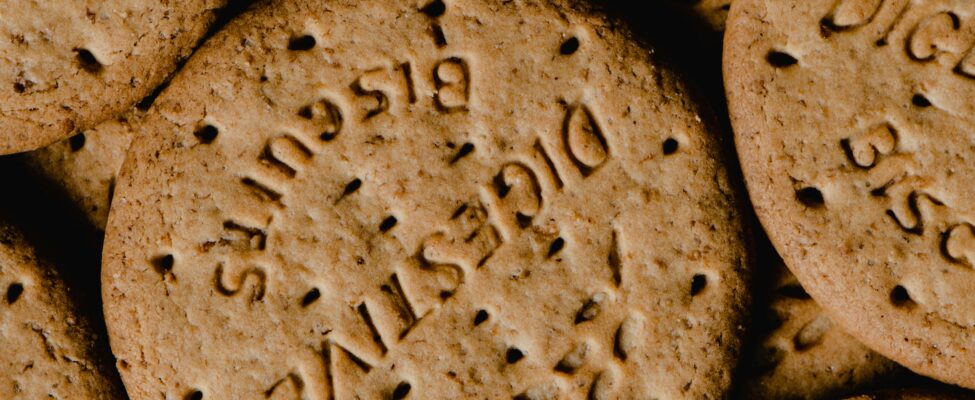
- Digestives – Slightly sweet, wheaty biscuits with a crumbly texture. Many people dunk them in tea, and they are often used as the base for cheesecakes. Chocolate Digestives are Digestives covered with a layer of chocolate, making them even more popular.
Digestives (and their chocolate version) consistently top the rankings of the UK’s most popular biscuit - Rich Tea – In many ways, this is similar to the digestive. Very plain and light but slightly firmer – less crumbly than the digestive. Likewise, perfect for dunking in tea. They don’t break apart too quickly, which is why they are still loved.
- Custard Creams – Two flat biscuits with a sweet vanilla-flavoured filling inside. For older people, they are reminders of childhood.
- Hobnobs – Crunchy, oaty biscuits that are slightly chewy. The chocolate-covered version is also available. Think porridge oats in biscuit form.
- Shortbread – A Scottish classic, made with lots of butter. Shortbread is crumbly, rich, and slightly sweet. People often eat it at Christmas, but it’s also enjoyed all year round. The buttery-ness is the key!
Classics vs Fancy Biscuits
These biscuits are considered classics. They’re simple, everyday biscuits that you can find in almost every home in Britain. Of course, nowadays supermarkets are full of more “fancy” biscuits—triple chocolate cookies, biscuits with salted caramel, and imports from overseas which are now popular as well, like Italian biscotti. Some people might even turn their nose up at Digestives or Rich Tea, saying they are too plain or old-fashioned. But these traditional biscuits remain very popular and are an important part of British food culture.
Indeed, for all the criticism that British food gets, it is often said that the UK “does biscuits very well”.
What Is a Cookie in British English?
In Britain, the word cookie doesn’t mean all biscuits. A cookie is a sub-category of biscuit – one that is round and has visible chunks of chocolate or nuts baked into it. For example, a chocolate chip cookie is the default choice.
So remember: in British English, all cookies are biscuits, but not all biscuits are cookies. This is a small but useful detail to keep in mind when you’re improving your English.
What Is a Biscuit in American English?
In the US, the word biscuit means something completely different. An American biscuit is a soft, fluffy bread roll. It is often eaten warm, with butter or gravy, or served alongside fried chicken.
In American English, you might hear:
- “Biscuits and gravy” (a traditional Southern breakfast)
So if you ask for a biscuit in America, don’t be surprised when you get bread instead of a crunchy snack!
A British Reaction to American Biscuits
If a British person sees an American biscuit, they might laugh and say: “That’s not a biscuit—that’s a scone!” This shows how strongly people connect food words to their own culture. What Americans treat as a savoury side dish looks to a British person like something that belongs on an afternoon tea tray.
American Biscuit vs British Scone
It’s true that American biscuits look like scones, but they are not exactly the same. American biscuits are lighter, flakier, and always savoury. British scones are denser, a little sweet, and usually eaten with butter, jam, and clotted cream.
Even the word scone can be confusing. In the UK, people pronounce it differently depending on where they live. Some say it like “skon” (rhyming with gone), while others say “skoan” (rhyming with cone).
So next time you put the kettle on for a cuppa, reach for the biscuit tin and enjoy one (or two…!) of your favourites!